Ashley
The Basics of Calorie Deficit: Understanding Its Significance for Weight Loss

Losing weight is easier when you know your calories. Is a long-term weight reduction only possible with a calorie deficit? Lucy Gornall questions the experts
It’s important to understand how to burn calories if you want to lose weight.
In its simplest form, weight loss is achieved when the body burns more calories than it consumes. Caloric deficit is what we call it.
There is more to this weight loss puzzle. What is a calorie, first? The word calorie is thrown around a lot, but do you know what it means and how it relates to metabolism?
Rob Hobson explains, simply put, that a calorie can be defined as a unit or energy.
Hobson explains that ‘the energy in food can be measured in calories, which helps people understand what they should eat to meet personal energy requirements.
A higher metabolic rate will result in a higher calorie burn
In general, we require a certain amount of calories per day to function. The NHS in the UK recommends that men consume 2500 calories and women consume 2000 calories.
Hobson says that metabolism is the chemical process that occurs in the body for the maintenance of life. These processes help in the conversion from food to energy.
This is known as your basal metabolic rate and it can vary between individuals,’ explains Hobson. It is called your basal metabolism rate, and it can vary from person to person.
The basal metabolic rate of an individual is the rate at which calories are burned when they do nothing. A higher metabolic rate will result in a higher calorie burn.
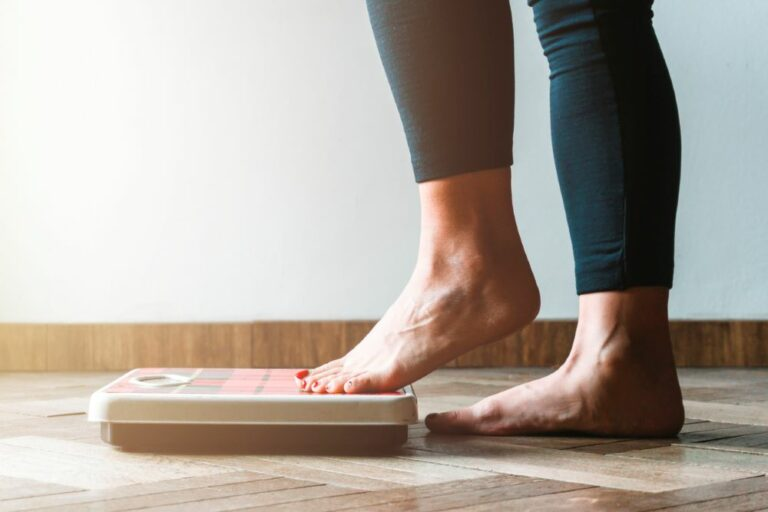
The basic factors that affect your metabolism and calorie burning
The metabolism is what determines how many calories you burn. There are other reasons that someone might burn more calories than they realise.
Hobson says that a person’s body size can be a factor. For example, someone who is larger will burn a lot more energy.
“A person who is overweight will burn more energy while moving because it takes more effort for them to move around.
“Having more muscle mass to fat will help you burn more calories, not only at rest but also when you’re moving.” Hobson says that men often burn more energy because they have more muscle mass than women with similar weight and age.
Overweight or obese people will burn more energy.
Age is also a factor.
“Muscle mass decreases with age, and even more so in women going through menopause.” Hobson says that this drop in muscle mass results in fewer calories being burned when you move.
It is therefore important to maintain a healthy metabolism by maintaining a healthy body mass and staying active.

Want to speed up your metabolism?
Rob explains the only way to achieve this is by exercising and changing your body composition, which includes increasing muscle mass and reducing fat.
It’s a myth that certain foods can boost your metabolism.
Hobson says that green tea and chillies are two foods that are frequently touted for their ability to help you burn more calories.
Hobson reveals that while chillies may temporarily increase your metabolism due to the heat, they do not cause a significant calorie reduction.
Sleeping while burning calories?
It’s a constant process. Even when you sleep, yes!
The body does not shut down when sleeping. Hobson says that energy is required by the body for a variety of functions.
The basal metabolic rate can also be affected by a woman’s cycle.
You will burn more calories during sleep if your BMR is higher.
Rob states that the basal metabolism rate can also be affected by a woman’s cycle. However, this depends on the individual.
Hobson says that other research has suggested that BMR might increase during the luteal period of the cycle, between ovulation (between the first period and the second), but the differences in energy levels are very small.

Calorie Burn Throughout the Day
Your BMR is not the only way you burn calories every day. Moving around during the day, whether it’s a planned workout or just walking, cleaning, cooking, and climbing stairs is an excellent way to burn calories.
If you want to lose weight a gym session of one hour with the rest of your day spent sedentary is not enough, unless you are taking in fewer calories than you use.
Your BMR isn’t all you burn in a day.
Keep moving during the day. Take a walk on your lunch break. Use the stairs rather than the lift. Park a bit further from your destination to allow you to walk more.
Some foods can burn more calories by chewing, digesting and consuming them than they contain. Celery is a good example.
Celery is low in calories, but because it is high in water it requires more energy to eat it and digest it. Rob says that this is an exaggeration and there are no negative calorie foods.
What about supplements
Rob claims that there are a number of pills and potions available on the market which claim to burn calories.
Caffeine increases your metabolism for a short time as your heart rate rises and adrenaline hormones kick in. H0bson reveals that athletes use this supplement.
Nigel Mitchell, Performance Nutritionist, says that caffeine is used in every sport he has participated in to improve performance.
Caffeine increases your metabolic rate while your heart rate is raised.
Athletes who consume caffeine in a conscious manner at certain times may do so by consuming coffee, pills, gum or energy gels that combine caffeine with carbohydrates.
“Subconscious use is someone like myself having two espressos before I go for a bicycle ride”.
Hobson says, “If you look at the research on caffeine and exercise, it’s probably the most studied supplement”.
This supplement is an ergogenic, improving performance and reducing fatigue perception. However, I would not rely on this for weight loss.

Eat MORE and take in LESS
It can be difficult to reduce the amount of food you consume. This often requires a lot of willpower. You can still eat large amounts of food, without having to worry about the calories.
Hobson explains that the easiest way to achieve this is to eat foods high in water content, as these contain less calories but are more filling.
Salad vegetables, for example, are an excellent choice because you can pile up a lot of them on your plate and still consume very few calories. It is the same for soups, stews broths and casseroles. As long as the soups are tomato-based or broth stock based, they contain a lot of water.
Arguments against calories
Calorie counting is not always the best way to manage weight.
According to research, the type of bacteria that lives in your gut can influence the amount of calories you actually get from food.
Hobson says that even people who are naturally slim have different microorganisms in their gut as compared to people who are overweight.
He says that another argument that he adds is that your body “has a set point” that governs your weigh”.
A deficit is created when you eat less than you burn each day.
The hypothalamus, located in the brain’s limbic system, controls everything in the body. It works to maintain equilibrium. Even if you’re dieting and working out, or reducing your caloric intake, the body may still struggle to maintain the set point.
It could be the reason some people have trouble losing weight.
In a biological sense, if you eat less than you burn each day you will be in a deficit. This is what causes weight loss. This concept is not as simple as it seems. It may be that people use calories differently.
Calories are a very simple and accessible way to track your overall energy intake.
It is still true that in order to lose weight, people must make changes to their diet. This means eating less while increasing daily activity.